Why Your Low Back Pain Keeps Coming Back (And 2 Things You Can Do About It Today)
Dr. Eric Phillips
July 6, 2026
You know the moment. You reach down to grab something off the floor, or you stand up too fast from the couch, and there it is again. That familiar grip in your low back that stops you cold.
Maybe you tell yourself it's nothing. You've felt it before. It'll calm down in a day or two, like it always does.
But somewhere underneath that, there's a quieter thought that's a lot more frustrating: *why does this keep happening?*
You've rested it. You've iced it. Maybe you've stretched every night for a week straight. You've probably gotten adjusted, or tried a foam roller, or bought one of those lumbar pillows for your car seat. And it helps, for a little while. Then you bend the wrong way, or sit too long at your desk, or pick up your kid the wrong way, and you're right back where you started.
That cycle is exhausting. Not just physically. It starts to change how you move through your own life. You stop bending the normal way. You brace before you sneeze. You quietly opt out of the hike, the golf trip, or picking up your grandkids, because you're not sure your back will let you.
If that sounds familiar, we want to be very clear about something: **this is not because you have a fragile back, and it is not because you did something wrong.** It's because nobody has ever actually figured out why it keeps happening in the first place.
Why the Usual Advice Doesn't Fix It
Rest, ice, and a quick adjustment are not bad tools. They genuinely help calm things down when your back is angry. The problem is that calming down pain and fixing the reason it showed up are two completely different jobs, and most care stops after the first one.
Here's what that usually looks like: you go in hurting, someone treats the area that hurts, you feel better for a few days, and you leave with no real answer to the question that actually matters — why did this happen, and what is going to stop it from happening again.
Low back pain that keeps returning is almost always a signal, not a random event. Something in the way your body is moving, bracing, and controlling load is off, and your low back is the part that's absorbing the consequences. Until that gets identified, you're just managing symptoms on a loop.
What's Usually Actually Going On
In our experience treating this day in and day out, two things show up constantly in people with recurring low back pain, especially if imaging came back "normal" and everyone told you nothing is structurally wrong.
**The first is breathing.** It sounds unrelated, but your diaphragm is your deepest core muscle, and how you breathe directly affects how well your spine is supported under load. A lot of people who deal with chronic low back tightness are shallow, chest-dominant breathers, especially under stress. That pattern quietly robs your core of the pressure and stability it needs, and your low back picks up the slack.
**The second is a breakdown in deep core activation** — specifically the ability to create stable pressure through your trunk (what we call intra-abdominal pressure, or IAP) before you move. Most people brace by tensing their lower back or gripping their glutes, instead of building pressure through the deep core first. Over time, that pattern puts a disproportionate amount of load directly on the low back with almost every bend, lift, and twist.
Neither of these show up on an X-ray. Neither of them gets fixed by a single adjustment. And neither of them get better until someone actually looks for them.
Andy's Story
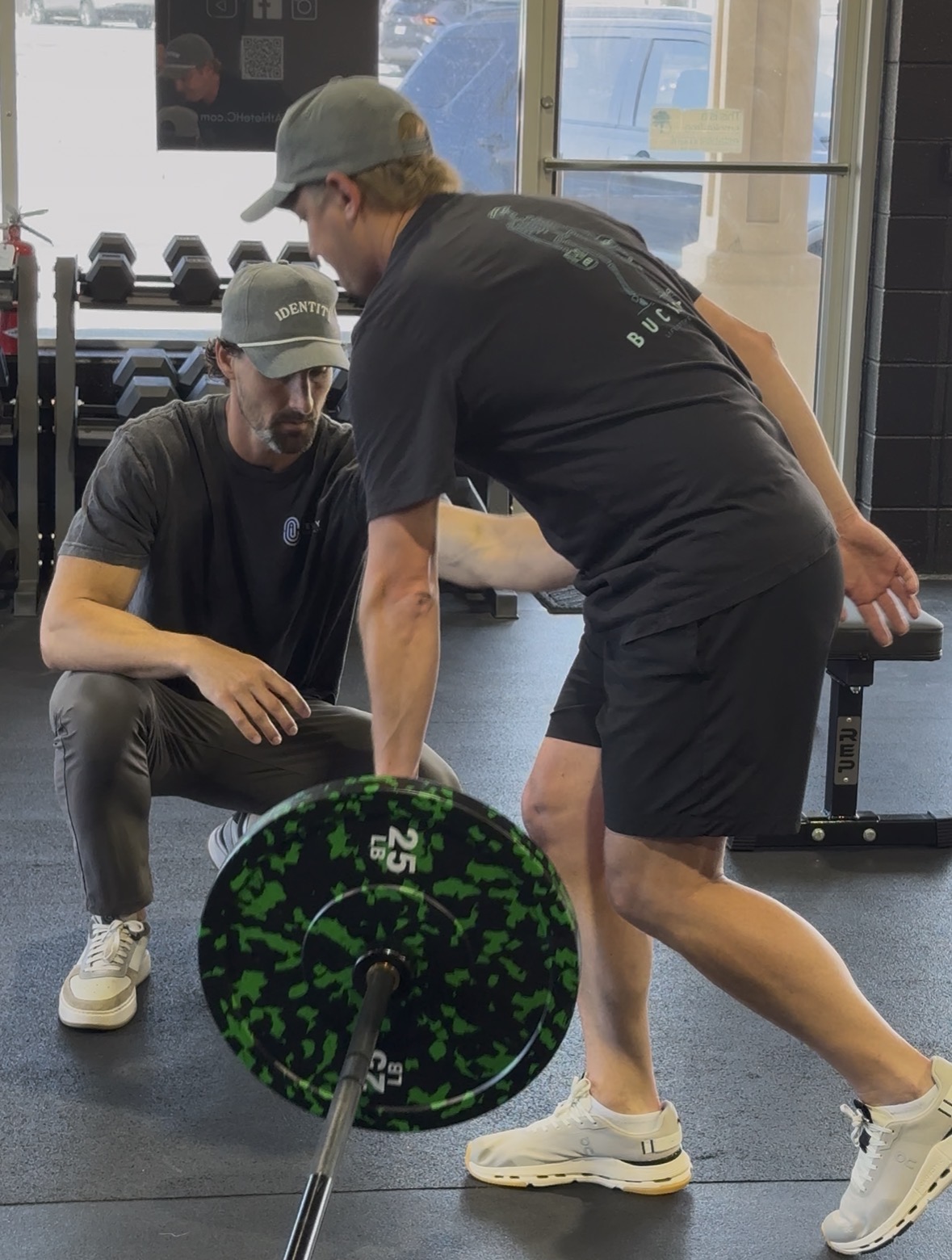
One of our patients, Andy, dealt with exactly this. He'd tried the usual round of care and kept ending up back in the same spot; the relief never held. When he came in, we didn't just look at where it hurt. We looked at how he moved, how he braced, and how he breathed under load — and built a plan around what we actually found.
He's shared his story with us on video, talking through what it was like to finally have someone explain *why* it kept happening instead of just treating it again. It's the kind of moment we hope for with every patient who's been stuck in that same loop.
Two Things You Can Start Today
You don't need equipment or a diagnosis to start improving how your core supports your back. These two are simple, low-risk, and worth doing daily, whether or not you're currently dealing with pain.
1. 90/90 Diaphragmatic Breathing
- ·Lie on your back with your knees bent and your shins resting on a chair or couch, so your hips and knees are both at roughly 90 degrees.
- ·Place one hand on your chest and one on your belly.
- ·Breathe in slowly through your nose, aiming to feel your belly and lower ribs expand out to the sides — not your chest rising.
- ·Exhale slowly and fully through your mouth, letting your ribs settle back down.
- ·Do 6-8 slow breaths like this, once or twice a day.
This position naturally helps reposition your ribcage and pelvis so your diaphragm can actually do its job, instead of your neck and shoulders taking over the work of breathing.
2. Dead Bug for Deep Core Activation
- ·Lie on your back, arms reaching straight up toward the ceiling, knees bent to 90 degrees over your hips.
- ·Before you move anything, exhale and gently brace your deep core, like you're bracing for a light tap to the stomach, without gripping your lower back or squeezing your glutes.
- ·Keeping that brace, slowly lower one arm overhead and the opposite leg out straight, just until your low back starts to want to arch off the floor.
- ·Return to center and switch sides.
- ·Aim for 6-8 slow reps per side, keeping your low back gently flat against the floor the entire time.
This teaches your body to create stability through your deep core before you load your spine, which is exactly the pattern that tends to break down in people with recurring low back pain.
These two alone will not fix a deeper movement or structural issue if one is present. What they will do is start rebuilding the foundation that a lot of low back pain sits on top of, and give you a clearer sense of whether breathing and bracing are part of your picture.
Where to Go From Here
If you've been stuck in the rest-ice-adjust-repeat cycle for months or years, breathing drills and core activation are a great place to start, but they're not a substitute for actually finding out why your specific back keeps doing this.
That's what a real assessment is for. Not a quick look at where it hurts, but an actual evaluation of how you move, breathe, and brace, so we can build a plan around the real cause instead of the same short-term fix you've already tried.
Ready to Stop Guessing?
If this article sounds like your last five years with your low back, we would love to help you get some real answers. Come in, we'll do a thorough assessment, and we'll build a plan around what we actually find, not just where it hurts today.
Ready to get a real plan?
If what you read here resonates — come in. We will do a real assessment, find what is actually going on, and build a plan around where you want to go.
★★★★★242 five-star reviews on GoogleTakes 2 minutes. No commitment.